
Organisations don't just use judgement. They produce it.
Every decision is shaped by the conditions people work in: workload, supervision, culture, information and, increasingly, AI. And every decision reshapes those conditions in turn.I speak, write and advise on how organisations make, support, develop and learn from consequential decisions.Twenty-five years across forensic science, counter-terrorism, national security and defence. Creator of the Judgement Architecture and the Decision Performance Under Pressure (DPUP) framework.
The Challenges Shaping Judgement
The pressures on judgement are changing.
AI is entering everyday decisions. Producing an answer is becoming easier. Knowing whether it is sound, understanding its basis and being able to defend it remain human responsibilities.
Expertise is becoming harder to form. As AI and new ways of working change professional practice, organisations must consider how practitioners still gain experience, exercise independent reasoning and learn to recognise uncertainty.
Pressure changes practice. Sustained workload and competing demands can narrow attention, weaken review and gradually normalise compromises that would once have been unacceptable.
Measures shape behaviour. What organisations measure, reward and prioritise influences what people notice, what they question and what they overlook.
Lessons do not always change practice. Reviews and inquiries can identify what went wrong without changing the conditions that allow similar failures to recur.
These challenges are connected. They concern not only the capabilities people possess, but also the environments in which those capabilities are developed and exercised.Understanding that relationship is central to my work.
The Judgement Loop
Judgement shapes the environment. The environment shapes judgement.
My work rests on a simple idea with significant consequences: judgement is not formed in isolation. It emerges through the continuing relationship between the person making a decision and the environment in which that decision takes place.Judgement Formation concerns what people bring to a decision: attention, perception, reasoning, experience, self-regulation and the habits that develop through practice.Cognitive Ecology concerns the environment in which judgement operates: information, workload, procedures, supervision, culture, incentives and technology.The two continually influence one another.The environment shapes what people notice, trust, learn and question. Their decisions and the outcomes that follow, in turn, reshape the environment. Over time, an organisation's decisions help create the conditions under which its next decisions will be made.A system that rewards speed over scrutiny can gradually produce different habits of judgement. A technology introduced to assist decision-making can change how expertise develops. A procedure designed to prevent error can become a formality if the conditions surrounding it undermine its purpose.These feedback loops can reinforce weaknesses, but they can also support learning and improvement.
This is why the same intervention does not work everywhere. Retraining people will not necessarily resolve a problem created by workload or process design. Redesigning a process will not necessarily address a capability that has never been properly developed.The task is to understand how the elements interact—and where change is most likely to make a difference.Together, these ideas form the Judgement Architecture. The Decision Performance Under Pressure (DPUP) framework applies it to judgement under pressure. It identifies three system conditions (Coherence, Stabilisation and Scaling), five individual disciplines (Perceptual Clarity, Assumption Testing, Disciplined Action, Behavioural Reliability and Consequence Awareness), and Recalibration: how feedback and outcomes inform future judgement and reshape the systems in which it operates. Developed through forensic science, it addresses questions relevant wherever decisions carry consequences.
Talks, Briefings and Workshops
Ideas that change how we see decisions.
Talks and Briefings
The best way to begin is often a conversation in the room.My talks draw on more than twenty-five years of work across forensic science, investigations, defence and national security, connecting practical experience with the challenges organisations face today.
Capable People, Poor Decisions
How organisations shape the judgement they get—and what leaders can do about it.
Why do capable people make consequential errors in organisations with expertise, procedures and experience? Explore how working conditions shape judgement, how decisions reinforce those conditions, and where leaders can intervene.
When Answers Become Easier Than Thinking
Human judgement, professional expertise and oversight in the age of AI.
AI changes more than how quickly work can be completed. It can change how people learn, reason, exercise independent judgement and demonstrate expertise. What should organisations preserve as they adopt increasingly capable tools?
What Forensic Science Teaches About Judgement
How sound judgement is formed, sustained and tested under pressure.
Forensic science offers a powerful lens through which to examine judgement. Its conclusions must connect evidence to interpretation, withstand scrutiny and remain defensible under challenge. But reliable judgement depends on more than individual expertise or sound procedures. It is shaped by how people develop their capabilities, the conditions in which they work, and the way decisions influence the environments in which future decisions are made. This talk explores what forensic science reveals about the formation and preservation of sound judgement—and what organisations can learn from a discipline in which conclusions must withstand scrutiny.
Formats
Keynotes: typically 30–45 minutes.
Executive and board briefings: typically 60–90 minutes.
Seminars and professional development: tailored to teams, professional bodies and specialist audiences.
Each session is adapted to the audience, its responsibilities and the decisions it faces.
Workshops
Practical half-day and full-day sessions translating the DPUP disciplines into professional practice.Participants work through relevant scenarios to practise separating evidence from inference, testing assumptions, forming an independent view before consulting AI, strengthening review and challenge, and learning from outcomes.Workshops are built around the decisions participants actually face. The emphasis is on practising defensible reasoning and decision behaviours, not simply discussing concepts.
Advisory Work
Understanding how organisations make decisions.
Talks and workshops often raise questions about a particular process, team or decision. Advisory work is where those questions are examined in depth.I work with organisations whose decisions depend on evidence, analysis and professional judgement. This includes forensic and analytical laboratories, investigative and regulatory bodies, legal and insurance practices, and defence and national security organisations.My work is guided by the Judgement Architecture: an approach to understanding how judgement is formed, how it is shaped by working conditions, and how decisions and outcomes influence future practice.The aim is not to apply the same solution to every problem. It is to understand the problem well enough to identify where change is warranted.
Judgement Architecture Review
When errors, rework or delays are increasing, review has become a formality, or new technologies are changing how decisions are made.
A structured review of a defined decision process—for example, how analytical results are interpreted and signed off, how cases are escalated, or how conclusions are challenged before a decision is authorised.
Depending on the agreed scope, I examine relevant records, interview people across roles, observe work practices and review available performance data. The analysis considers how capability, information, procedures, supervision, technology and organisational conditions interact to support or constrain judgement.You receive:
A map of the decision process and its critical decision points.
Evidence-linked findings on where the process supports judgement and where it appears vulnerable.
An analysis distinguishing capability and development needs from process weaknesses and wider organisational or technological conditions.
Prioritised recommendations and a leadership debrief.
The review examines processes and conditions rather than setting out to attribute individual blame. It is a structured expert review guided by the Judgement Architecture, not a validated scoring instrument.Indicative timeframe: four to six weeks, depending on scope and access to evidence.
Judgement Formation Review
When developing reliable judgement in early-career practitioners is proving difficult, or AI is changing how professional capability is acquired and demonstrated.
A review of how your organisation develops judgement, from initial training through supervised practice to independent professional responsibility.
I examine how practitioners gain experience, receive feedback, learn to manage uncertainty and demonstrate readiness to report, approve or sign off work. Where relevant, the review considers how AI and other technologies affect learning, supervision and the development of independent judgement.You receive:
A map of the formation pathway, including key progression and authorisation points.
Findings on training, supervision, case exposure, feedback and readiness decisions.
Identification of gaps between expected capability and the evidence used to demonstrate it.
A practical plan to strengthen development, supervision, assessment and authorisation.
The review assesses the organisation's approach to developing and demonstrating professional judgement. It does not certify individual competence.Indicative timeframe: three to four weeks for a defined professional pathway.
Decision Reconstruction
After an adverse outcome, near miss or inquiry, when an organisation needs to understand how a decision developed.
A reconstruction of a defined decision or sequence of decisions: what information was available at each stage, how it was interpreted, how uncertainty was handled, and how earlier judgements may have influenced later decisions.You receive:
A chronology of the decision and the information available at key points.
An evidence-based analysis of reasoning, handovers and relevant conditions.
Findings on contributing factors, evidence gaps and alternative explanations where appropriate.
A prioritised learning action plan identifying changes to consider.
The engagement is designed for organisational learning. It is scoped separately from any formal investigation or determination of individual responsibility. Accepted selectively, subject to scope and conflict checks.Indicative timeframe: two to three weeks for a tightly bounded matter; complex matters require separate scoping.
Discuss an engagement
Every engagement begins with a conversation about the problem, the decisions or processes in scope, and the outcome the organisation needs.Scope, deliverables, timeframe and fees are agreed before work begins.
The Judgement Forge
Heat reveals what holds.
The Judgement Forge is my ongoing exploration of how judgement is formed, why it breaks down under pressure, and how the systems and technologies around us shape the way we think.Through essays on human formation, professional expertise, organisational behaviour and AI-mediated decision-making, I examine the questions behind the work.How do people learn to judge well? What happens when the conditions that once developed expertise begin to change? And how can organisations create environments that support sound judgement rather than undermine it?One essay every two weeks. Free to read.
Recent essay
When Answers Become Easier Than Thinking
What happens to expertise, independent judgement and meaningful oversight when AI makes producing an answer easier than understanding it?
About
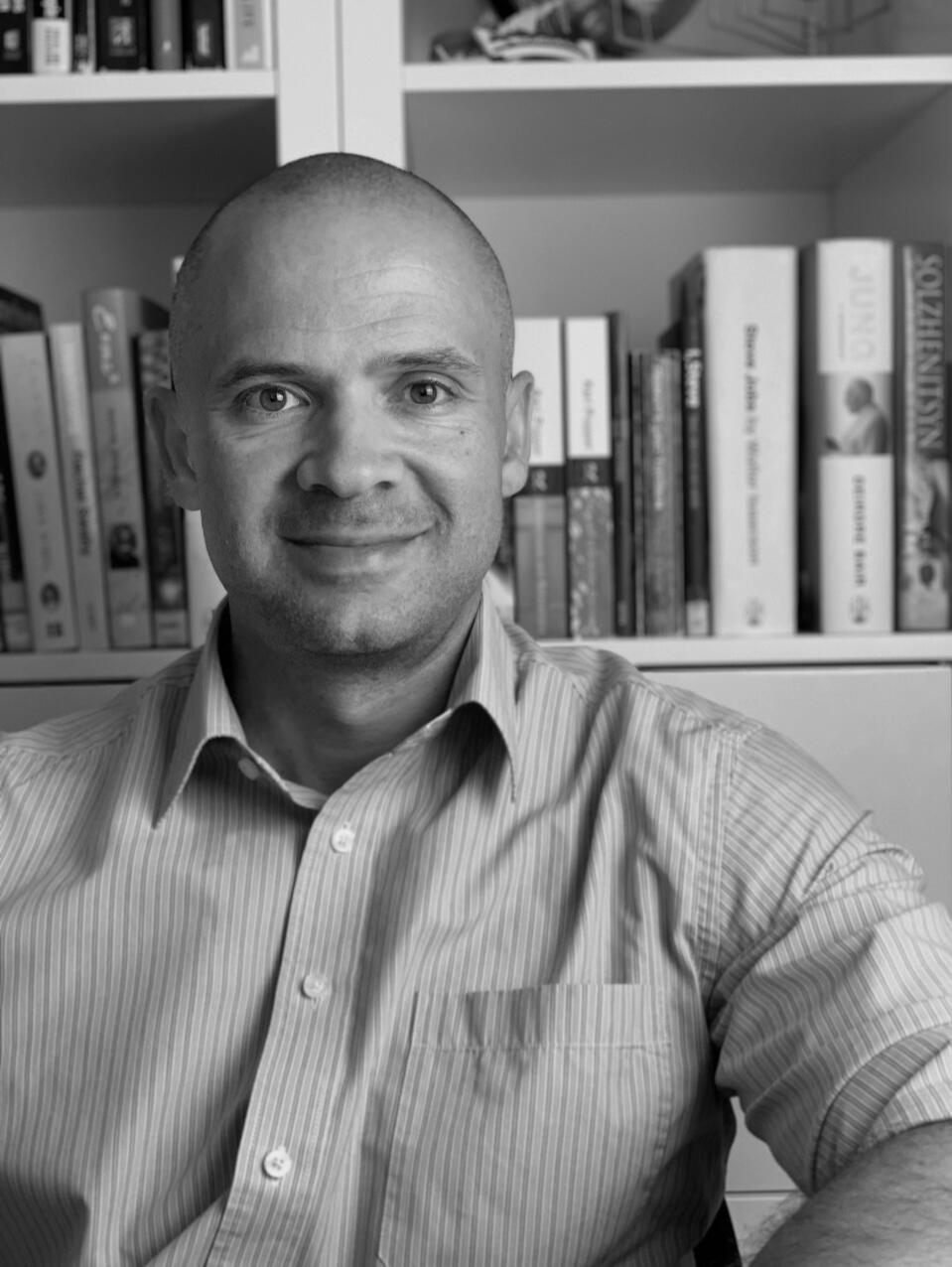
Dr John Coumbaros
I'm a forensic scientist, educator and writer. For more than twenty-five years, my work has spanned forensic science, counter-terrorism, CBRNE, national security and defence, including operational and leadership roles with the Australian Department of Defence and the Australian Federal Police.Across these fields, I have returned to a persistent question: why do capable people and organisations sometimes make consequential errors, even when they have expertise, procedures and considerable experience?That question is not only about individual capability. It is also about the conditions in which people work, the systems through which decisions are made, and the ways experience changes future practice.From operational experience to the Judgement Architecture
The question became particularly tangible during my time as Manager of Forensic Chemistry at ChemCentre WA. I inherited a forensic chemistry operation with a casework backlog exceeding 100 days. Through changes to workflow, review processes and leadership, I brought turnaround below ten days without adding staffing or equipment. That performance was sustained during my tenure.The experience reinforced a distinction that has since informed my work: achieving a result and building the conditions that allow it to be sustained are different challenges. Both depend on more than technical capability alone.My subsequent work has developed these questions into the Judgement Architecture and the Decision Performance Under Pressure framework.I hold a PhD in Applied Science, specialising in chemistry, minerals and materials, and an MBA. I am Academic Chair of Forensic Science at Murdoch University.My writing, speaking and independent advisory work are separate from my university role.
Get In Touch
Start a conversation.
To invite me to speak, arrange a briefing or seminar, or discuss a workshop or review, tell me a little about your organisation and what you have in mind.I'll reply personally.
© Dr John Coumbaros. All rights reserved.